
Creating the perfect office in your house can change the way you work and feel every day. Imagine stepping into a space that boosts your focus, sparks your creativity, and makes you excited to start your tasks.
You don’t need a big budget or a fancy design to make this happen. With a few simple ideas, you can transform any corner of your home into a productive and comfortable workspace. Keep reading to discover easy, practical tips that will help you decorate your home office just the way you need it.
Your ideal work environment is closer than you think.
Choosing The Right Space
Choosing the right space for your home office sets the foundation for productivity and comfort. The area you pick affects how focused you feel and how much you enjoy working. Think about your daily habits and how the space can support them.
Finding A Quiet Corner
Noise can easily distract you from important tasks. Look for a spot away from busy areas like the kitchen or living room. A quiet corner helps you maintain concentration and reduces stress during work hours.
Consider using noise-cancelling headphones or adding soft furnishings like rugs and curtains to absorb sound. Have you noticed how even small sounds can pull your attention away? Creating a silent zone is key.
Maximizing Natural Light
Natural light boosts your mood and energy levels. Choose a space near a window to soak in daylight throughout the day. This simple choice can make your office feel inviting and alive.
If you don’t have many windows, use mirrors to reflect light or pick light-colored walls to brighten the room. How often do you find yourself drained in a dim room? Bright spaces help you stay alert and creative.
Considering Room Size
Your office space should fit your work style comfortably. A cramped area can feel suffocating, while a too-large room might make you lose focus. Measure your space and plan furniture that fits well without overcrowding.
Think about storage needs and how much room you require for your desk and equipment. Would you rather have a cozy nook or an open, airy spot? Matching the size to your workflow makes work more enjoyable.
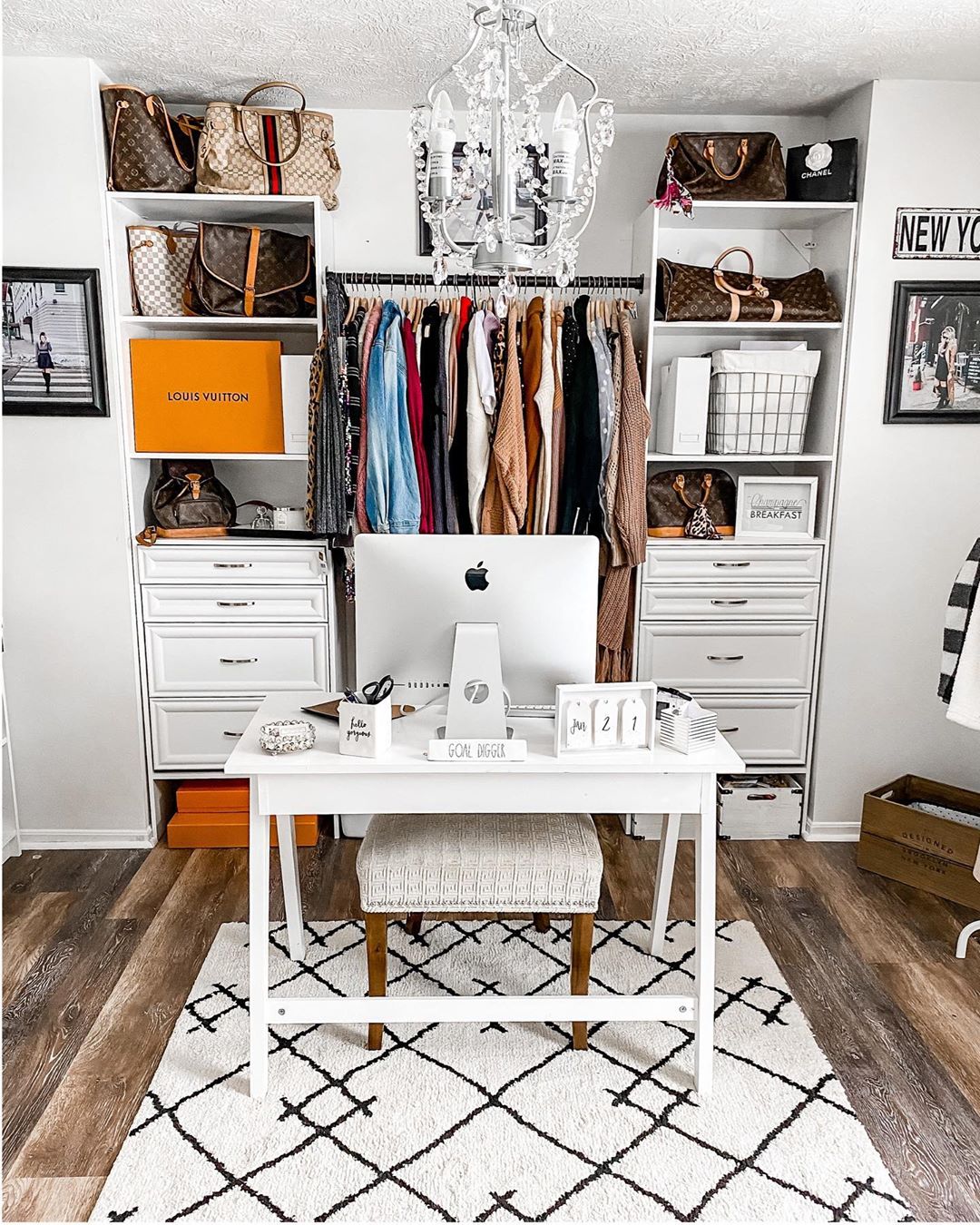
Credit: www.extraspace.com
Selecting Functional Furniture
Choosing the right furniture is key to making your home office both comfortable and productive. Functional furniture supports your work style without cluttering your space. It’s not just about looks—each piece should serve a purpose and fit your daily needs.
Ergonomic Chairs And Desks
Comfort impacts focus more than you might think. An ergonomic chair with adjustable height and lumbar support helps prevent back pain during long work hours.
Pair it with a desk that fits your space and work habits. Desks with adjustable heights let you switch between sitting and standing, which can boost energy and reduce fatigue.
Think about your current routine—do you type a lot? Do you need extra surface space for documents or dual monitors? Choose furniture that matches those needs.
Storage Solutions
Clutter steals your attention. Storage isn’t just about hiding mess; it’s about keeping everything within easy reach.
- Use filing cabinets or drawers to organize papers and office supplies.
- Open shelves can display books and decorative items, making your space inviting.
- Consider vertical storage to save floor space and keep essentials at eye level.
Ask yourself where you naturally look when you need something—design your storage around those habits.
Multi-purpose Pieces
Limited space demands smart solutions. Furniture that serves more than one function can maximize your area without sacrificing style.
- A desk with built-in shelves or drawers combines workspace and storage.
- Fold-out tables or wall-mounted desks free up room when not in use.
- Ottomans or benches with hidden storage add seating and keep clutter out of sight.
Could a single piece help you streamline your workflow and save space? Look for furniture that adapts to your changing needs.
Incorporating Color And Decor
Choose calming colors to create a focused and comfortable workspace. Decorate with simple items that inspire creativity without cluttering the area. Bright accents can boost energy and mood while keeping the space inviting.
Creating an office space within your home can be an exciting endeavor. It offers a unique opportunity to design a workspace that truly reflects your personality and boosts productivity. A key aspect of this is incorporating color and decor strategically. Thoughtfully chosen colors and decor can significantly affect your mood, focus, and overall efficiency.Colors That Boost Focus
Did you know the colors in your environment can impact your concentration levels? Soft blues and greens are known for their calming effects, which can help maintain focus during long work sessions. If you need a creative boost, consider adding splashes of yellow or orange; these colors are known for stimulating creativity and energy. Think about the nature of your work: do you need to stay focused or are you looking for inspiration? Tailor your color palette accordingly. You might even experiment with different shades to see which ones resonate with you personally.Personal Touches
Your home office should reflect who you are. Adding personal touches not only makes the space more inviting but also boosts your mood. Consider placing family photos or souvenirs from memorable trips on your desk. These can serve as gentle reminders of why you work hard and what you’re working toward. You could also incorporate items that you find inspiring or calming, like a small plant or a favorite book. These personal elements can provide comfort and motivation during challenging tasks.Inspiring Wall Art
Wall art is a fantastic way to inject personality into your office. Choose pieces that inspire you or resonate with your professional goals. Perhaps a motivational quote framed elegantly on the wall can serve as a daily reminder to stay driven. Abstract art or serene landscapes can offer a mental escape during brief breaks, helping you return to work refreshed. As you select art, consider how it makes you feel and whether it aligns with your vision for your workspace. What does your current office decor say about you? Adjusting the colors and decor might just be the change you need to enhance your productivity and satisfaction.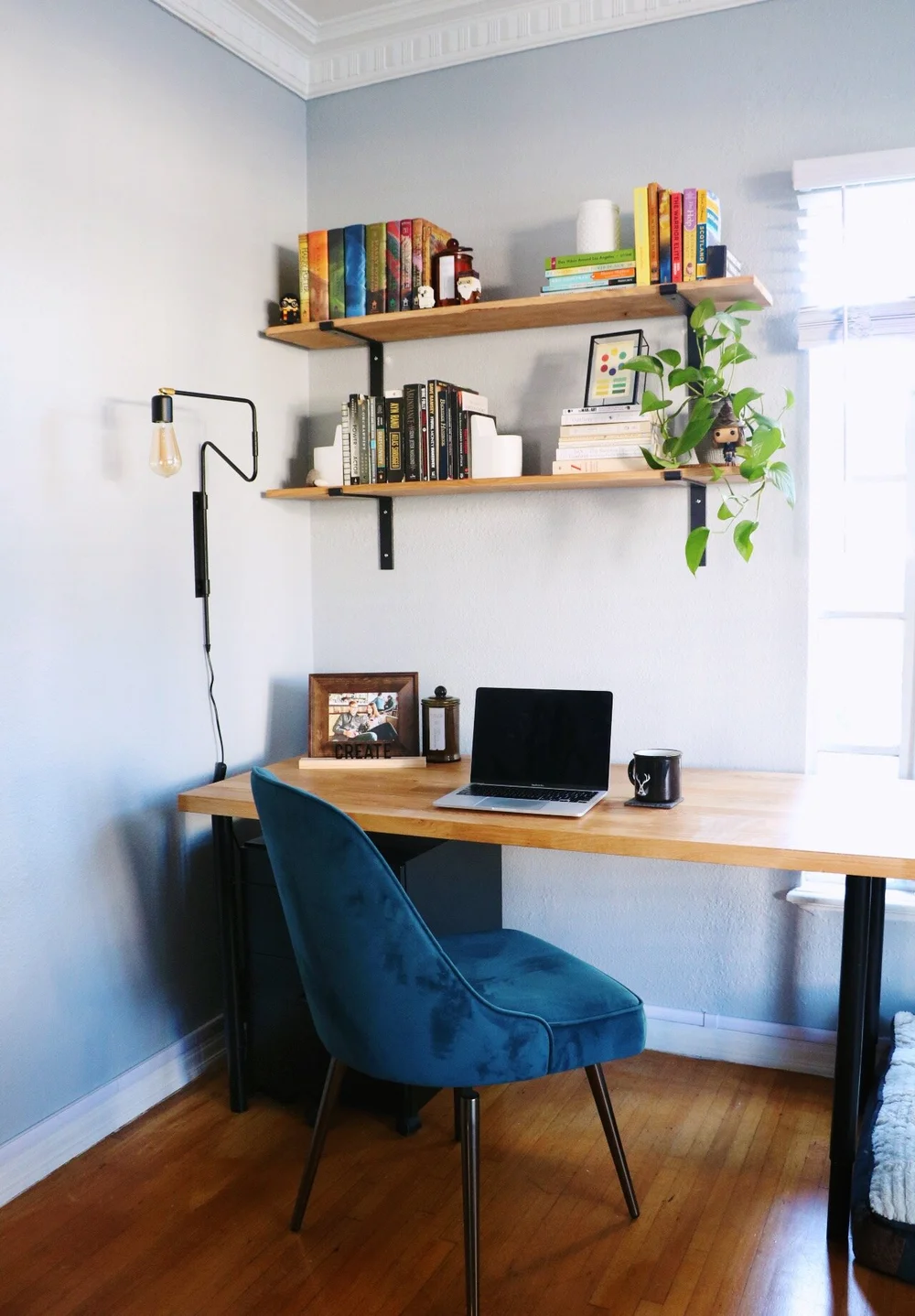
Credit: diydarlingblog.com
Optimizing Lighting
Optimizing lighting in your home office is more than just picking a bright bulb. It directly affects your focus, mood, and productivity. Getting the right balance of light can reduce eye strain and make your workspace inviting.
Task Lighting Options
Task lighting is crucial for detailed work like reading or writing. Adjustable desk lamps with LED bulbs offer clear, focused light exactly where you need it. Consider lamps with dimming features so you can control brightness based on your task.
Clip-on lights are handy if you have limited desk space. They can be positioned anywhere and moved easily. Think about color temperature too—cool white light helps you stay alert, while warm light is softer on your eyes during long hours.
Reducing Glare
Glare can cause headaches and make it tough to see your screen. Position your monitor perpendicular to windows rather than directly in front or behind them. This simple change reduces reflections significantly.
Anti-glare screen protectors are a practical addition. You might also try using sheer curtains or blinds to soften natural light without darkening the room. Have you noticed how a small adjustment in light direction can transform your comfort?
Ambient Lighting Ideas
Ambient light fills your entire workspace and sets the overall mood. Ceiling fixtures with soft, diffused bulbs create a balanced glow that complements task lighting. Avoid harsh overhead lights that cast shadows or create contrast.
Adding floor lamps or wall sconces can soften the room’s edges and make your office feel cozy yet professional. Mixing different light sources lets you adapt your environment for video calls or quiet work. How could changing your ambient light change your daily work experience?
Organizing For Efficiency
Organizing your home office boosts productivity and reduces stress. A tidy space helps you focus on tasks. Efficient organization saves time and keeps everything within reach. Planning smart storage and neat arrangements creates a calm work zone.
Cable Management
Untidy cables distract and slow you down. Use cable clips and ties to bundle wires neatly. Label cables to find devices quickly. Hide cables behind desks or under mats to keep them out of sight. A clean cable setup prevents tripping and device damage.
Desk Organization Tools
Desk tools keep essentials tidy and accessible. Use trays and holders for pens, paper, and gadgets. Drawer organizers separate small items for easy access. A clutter-free desk improves focus and comfort. Arrange items by frequency of use for quick reach.
Filing Systems
A good filing system stores papers logically. Use labeled folders or binders to group documents. Sort files by project, date, or priority. Keep active files close and archive old ones. A neat filing system saves time searching for papers.
Adding Greenery
Adding greenery to your home office creates a fresh and calming space. Plants bring life and color to any room. They also improve air quality and boost mood. Even small plants can make a big difference in your workspace.
Low-maintenance Plants
Choose plants that need little care to keep your office tidy. Succulents and snake plants thrive with minimal water. Pothos and spider plants grow well in low light. These plants survive even if you forget to water them sometimes.
Benefits Of Indoor Plants
Indoor plants clean the air by removing toxins. They reduce stress and increase focus during work. Plants add natural beauty, making your office more inviting. Having greenery nearby can improve overall well-being and creativity.
Creative Plant Displays
Use shelves, hanging pots, or wall-mounted planters to save desk space. Group small plants in clusters for a lively look. Try a vertical garden to add greenery without crowding the room. Mix pots of different sizes and colors for visual interest.
Creating A Motivating Atmosphere
Creating a motivating atmosphere in your home office is key to staying productive and inspired throughout the day. Your workspace should be a reflection of what drives you, helping you focus on your tasks and goals. Small adjustments in decor and mindset can make a big difference in how motivated you feel.
Incorporating Personal Goals
Write down your personal and professional goals and place them where you can see them daily. This constant reminder keeps your purpose front and center. Use simple notes, a whiteboard, or a framed list to track your progress and celebrate small wins.
Seeing your goals regularly helps you stay accountable and pushes you to take action. It’s like having a personal coach right in your office. What’s one goal you want to achieve this month that can fit right in your workspace?
Using Inspirational Quotes
Pick quotes that resonate with you and inspire positive energy. Frame them or use stylish prints to add personality to your office walls. Changing these quotes every few months keeps your environment fresh and your motivation renewed.
Try to choose quotes that challenge you or make you think differently about your work. This can spark creativity and keep you moving forward when tasks feel overwhelming. Which quote has helped you push through a tough day?
Setting Up A Vision Board
Creating a vision board turns your dreams into a visual reality. Collect images, words, and symbols that represent what you want to achieve. Place the board where you can glance at it often to keep your aspirations clear and top of mind.
A vision board is more than decoration—it’s a daily reminder of your ambitions. You might include career milestones, travel destinations, or lifestyle changes. How can your vision board help you make better decisions each day?

Credit: www.pinterest.com
Frequently Asked Questions
How Do I Choose The Best Spot For A Home Office?
Select a quiet, well-lit area with minimal distractions. Ensure it has enough space for your desk and storage. Natural light boosts productivity, so choose a spot near windows if possible. Comfort and accessibility are key for an efficient home office setup.
What Furniture Is Essential For A Home Office?
A sturdy desk and an ergonomic chair are must-haves. Add shelves or filing cabinets for organization. Consider a comfortable chair to support long working hours. Invest in furniture that promotes good posture and maximizes your workspace.
How Can I Improve Home Office Lighting Effectively?
Use a combination of natural and artificial light. Position your desk near windows for daylight. Add task lighting like desk lamps to reduce eye strain. Soft, adjustable lighting helps maintain focus and comfort throughout the day.
What Colors Work Best For A Home Office?
Choose calming, neutral colors like soft blues, greens, or grays. These colors reduce stress and increase concentration. Avoid overly bright or dark shades that may cause fatigue. A well-chosen color palette enhances creativity and productivity.
Conclusion
Creating a comfortable office at home helps you work better. Choose simple furniture that fits your space well. Add good lighting to reduce eye strain. Keep your desk tidy to stay focused. Personal touches make the space inviting and boost mood.
Small plants or art can brighten the room. Remember, a neat and organized office saves time. Your home office should feel calm and inspiring every day. Enjoy making your work area your own.