
Are you staring at the two empty walls around your dining room, wondering how to bring them to life? Those blank spaces hold so much potential to transform your dining experience and make every meal feel special.
Decorating these walls the right way can add warmth, style, and personality to your space. You’ll discover simple yet powerful ideas that will make your dining room walls stand out—without overwhelming your budget or taking too much time. Ready to turn those plain walls into your room’s best feature?
Let’s dive in.

Credit: www.create-enjoy.com
Choosing A Color Scheme
Choosing the right color scheme for the two walls around your dining room can dramatically change the space’s mood and style. The colors you pick will set the tone every time you sit down for a meal or entertain guests. It’s important to think about how the colors interact with each other and the room’s overall vibe.
Complementary Vs. Contrasting Colors
Complementary colors sit opposite each other on the color wheel, like blue and orange or green and red. Using these pairs can create a vibrant, energetic look that makes the dining room feel lively. But be careful—too much contrast might overwhelm the space.
Contrasting colors don’t always mean opposites. You can also pair colors that differ in shade or intensity, like a soft pastel against a deep, rich tone. This adds interest without clashing. Have you tried pairing a muted gray wall with a bold mustard yellow? The balance between calm and bright can make your dining area feel both cozy and dynamic.
Using Neutrals For Balance
Neutrals like beige, gray, white, or taupe offer a perfect backdrop to highlight your dining furniture or artwork. They help balance bolder colors on the adjacent wall, preventing the room from feeling too busy. Plus, neutrals are timeless, giving you flexibility if you want to change decor later.
If you’re unsure about color intensity, consider one wall painted in a soft neutral while the other shows a richer tone. This approach keeps the room grounded. Think about how natural light plays in your space—neutrals can reflect light, making the room feel more open and inviting.
Accent Wall Ideas
An accent wall is a great way to add personality without overpowering the dining room. Choose one wall to highlight with a bold color or pattern, while keeping the other wall more subdued. This creates a focal point and adds depth.
Try textured paint, wallpaper with subtle patterns, or even wood paneling as an accent. If you love art, paint the wall behind your dining table a deep hue to make framed pieces pop. What if you used a chalkboard paint wall for notes and menus? It’s functional and stylish.

Credit: cocolapinedesign.com
Incorporating Wall Art
Adding wall art to two walls around your dining room can transform the space from ordinary to inviting. Art gives your room personality and creates focal points that spark conversation. Choosing the right pieces and arrangement helps balance the room and reflect your style.
Gallery Wall Arrangements
Gallery walls are perfect if you have a mix of smaller art pieces, photos, or prints. Group items with a common theme or color palette to keep things cohesive. Use painter’s tape to plan your layout on the wall before hanging anything.
Try arranging frames in a grid for a clean, modern look or a more organic cluster for a casual vibe. Don’t be afraid to mix in personal items like vintage plates or small sculptures. How can you make your gallery wall tell a story about your family or travels?
Large Statement Pieces
A single large artwork can instantly elevate your dining room’s atmosphere. Choose a piece with bold colors or striking imagery that complements your furniture and lighting. Placing it on one wall lets it shine without overwhelming the room.
If your dining area feels cramped, a big mirror can act as a statement piece and make the space look larger. Consider oversized prints or canvases that reach eye level for maximum impact. What emotions do you want your dining space to evoke through this statement piece?
Mixing Textures And Frames
Combining different textures and frame styles adds depth and interest to your walls. Pair sleek metal frames with rustic wood or woven wall hangings for a layered look. This contrast keeps your décor dynamic and engaging.
Don’t limit yourself to just flat art—think about adding fabric art, metal sculptures, or shadow boxes. This variation encourages guests to take a closer look and appreciate the details. Which textures resonate most with your dining room’s vibe?
Adding Shelves And Storage
Shelves offer extra space for dishes, plants, or decor items, making dining walls functional and stylish. Storage units keep clutter hidden, enhancing the room’s neat look. Combining both creates balance and practical charm around your dining area.
Decorating the dining room walls with shelves and storage can transform the space. Shelves add character and functionality, creating a stylish and organized area. Using the right type of shelving brings elegance and practicality to your dining room. Here’s how you can effectively use shelves and storage to enhance your dining area.Floating Shelves For Decor
Floating shelves are a chic and modern way to display items. They are perfect for showcasing decorative plates, plants, or artwork. These shelves create an airy feel, without taking up floor space. Choose shelves in a color that complements your dining room palette. Consider the height and length to balance the room’s proportions. A well-placed floating shelf can become a focal point, drawing the eye and adding interest.Built-in Cabinets And Display
Built-in cabinets offer a seamless storage solution. They blend into the walls, providing a sleek look. These cabinets can store dinnerware, glasses, and serving pieces. Display sections can highlight special items or collectibles. Opt for glass doors to add elegance and allow visibility. Built-in cabinets maximize space and keep the dining room clutter-free. They can also be custom-designed to fit specific needs or styles.Combining Function With Style
Combining shelves and cabinets creates a dynamic and functional dining room. Mix open shelves with closed storage to balance aesthetics and practicality. Use shelves for decorative elements, and cabinets for everyday items. This combination offers versatility in design and usage. Ensure the materials and colors complement each other for a harmonious look. Thoughtful arrangement of shelves and storage adds depth and dimension to the dining room.Using Mirrors To Enhance Space
Mirrors are a smart choice to decorate two walls around the dining room. They make the space look bigger and brighter. This simple addition reflects light and adds style. Mirrors also create a feeling of openness, perfect for dining areas. Using the right mirrors can transform your room with ease.
Placement For Light Reflection
Place mirrors across from windows to bounce natural light. This spreads sunlight throughout the room. Position them near light fixtures to amplify brightness. Avoid placing mirrors where they reflect clutter. Keep reflections clean and inviting. Proper placement maximizes light and enhances the dining mood.
Decorative Mirror Styles
Choose mirror styles that match your room’s decor. Round mirrors add softness and balance. Rectangular mirrors offer a classic, clean look. Sunburst mirrors create a bold, artistic statement. Frames in wood or metal add texture. Use colors that complement your dining room palette. Decorative mirrors act as art and function combined.
Creating Depth With Mirrors
Large mirrors open up tight dining spaces visually. Layering smaller mirrors in a pattern adds interest and depth. Use mirrors with beveled edges for a subtle 3D effect. Group mirrors of different sizes on one wall. This breaks monotony and creates dimension. Depth from mirrors makes your dining area feel more spacious and inviting.
Incorporating Natural Elements
Adding natural elements to the two walls around your dining room can transform the space into a calming and inviting area. Nature-inspired decor brings warmth and texture, making your dining experience more pleasant. Think about ways to introduce greenery, wood, and natural fabrics that enhance the room without overwhelming it.
Greenery And Wall Planters
Greenery instantly livens up any space. You can hang wall planters filled with trailing vines or small succulents to create a fresh look. Choose plants that thrive indoors and require minimal care, like pothos or snake plants, so your walls stay green and vibrant.
Vertical gardens are another great idea if you want a statement piece. Imagine sitting down to eat with a living wall beside you—it adds texture and a breath of fresh air. Have you thought about how much natural light your dining room gets? That will help you pick the right plants.
Wood Accents And Panels
Wood brings a natural warmth that you can feel immediately. Consider adding wooden panels or slats to one wall for a rustic or modern touch. Even reclaimed wood adds character and tells a story, making your dining room unique.
If a full panel feels too heavy, try wooden shelves or a simple wood-framed mirror to add depth and interest. Wood works well with greenery, so pairing these elements can create a balanced, cohesive look. What textures do you want to feel in your dining space?
Using Natural Textiles
Textiles made from natural fibers like linen, cotton, or jute soften the room and add subtle color or pattern. Think about a fabric wall hanging or a tapestry to cover one of the walls. These can bring warmth and a tactile element that’s often missing in dining rooms.
You might also use fabric to create a DIY wall art piece or add texture behind a piece of furniture. When choosing textiles, consider how they will coordinate with your table linens or curtains for a harmonious feel. How could a simple fabric piece change the mood of your dining area?
Lighting Options For Walls
Lighting plays a crucial role in shaping the atmosphere around your dining room walls. The right lighting not only brightens the space but also draws attention to your decor and creates a cozy environment. Choosing the perfect lighting options can transform two plain walls into a stunning feature that complements your dining experience.
Wall Sconces And Lamps
Wall sconces add style and function without taking up floor space. They offer soft, ambient lighting that can be adjusted to set the mood for dinners or casual gatherings. Consider placing sconces on either side of a mirror or artwork to frame the pieces beautifully and add symmetry to your walls.
Lamps, particularly tall floor lamps or decorative table lamps on sideboards, provide flexibility. You can move them around to highlight different areas or create pockets of light. Choose lamps with dimmers to control brightness levels easily and enhance your dining atmosphere.
String Lights And Led Strips
String lights bring a playful, warm glow that’s perfect for casual dining rooms or open-plan spaces. They work well when draped along the edges of the walls or woven through shelves to add subtle illumination. LED strips offer a sleeker, modern alternative that can be hidden behind molding or under shelves for indirect lighting.
Both options are energy-efficient and easy to install. You can even select color-changing LEDs to match different moods or seasons, giving your walls a dynamic look. Have you tried experimenting with lighting color temperatures to see how it affects your dining mood?
Highlighting Art And Features
Use focused lighting to bring attention to artwork, textured walls, or architectural details. Picture lights mounted above frames or adjustable spotlights create a gallery-like effect that elevates your dining room’s style. This targeted lighting prevents your walls from looking flat and adds depth.
Think about layering your lighting by combining these spotlights with softer ambient sources. This approach allows you to change the vibe from lively to intimate with just a flick of a switch. What feature on your dining room walls deserves a spotlight to become the conversation starter?
Textile Wall Treatments
Textile wall treatments bring texture and color to dining room walls. They soften the space and create a cozy vibe. Using fabric on walls adds visual interest without overwhelming the room. These treatments are perfect for personalizing two walls around the dining area. They also help with sound absorption, making meals more pleasant. Here are some textile ideas to explore for your dining room walls.
Tapestries And Fabric Panels
Tapestries and fabric panels offer a bold design statement. They come in many styles, from traditional to modern patterns. Hanging a large tapestry can cover most of the wall, acting as art. Fabric panels are easier to change and customize with different prints. Both options add depth and color while being lightweight and easy to install.
Wall Rugs And Quilts
Wall rugs and quilts add a rustic, homey feel. Quilts often showcase intricate patterns and craftsmanship. Rugs hung on walls bring texture and warmth with thick fibers. These textiles can tell a story or highlight cultural heritage. They provide a unique look that stands out from typical wall decor.
Adding Softness And Warmth
Textiles naturally soften hard surfaces and absorb sound. They create a gentle atmosphere perfect for dining spaces. Warm colors and soft fabrics make the room inviting and relaxing. Using textiles on two walls balances the room’s look without clutter. This approach enhances comfort while keeping the space stylish.
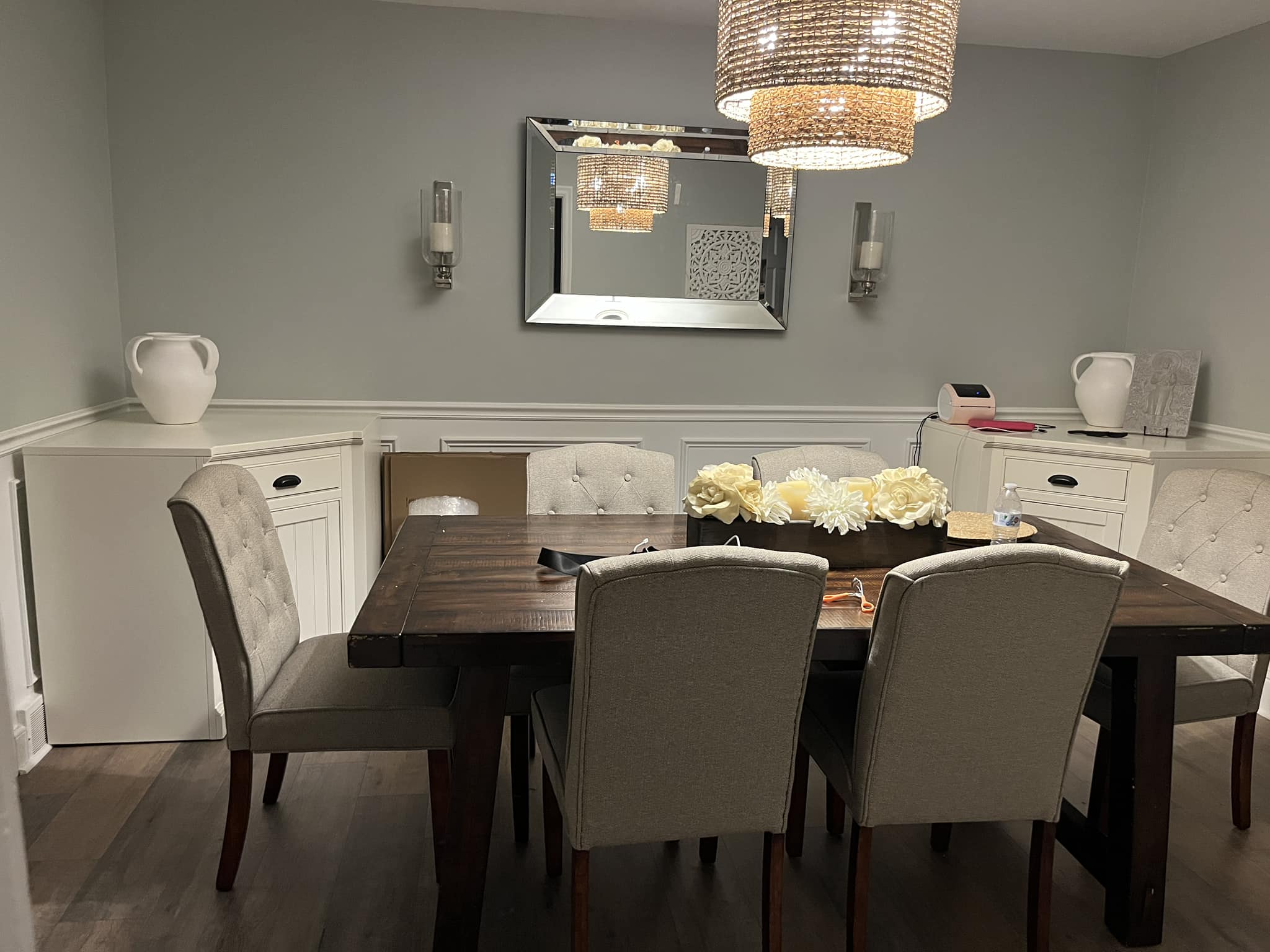
Credit: www.facebook.com
Frequently Asked Questions
How Can I Decorate Two Walls In My Dining Room?
Focus on complementary designs for each wall. Use artwork on one and a statement mirror on the other. This balance creates visual interest without overwhelming the space. Choose colors and textures that match your dining room theme for a cohesive look.
What Are The Best Colors For Dining Room Walls?
Neutral colors like beige, gray, or soft white create a calm dining atmosphere. Bold colors like navy or emerald add drama and warmth. Consider the room’s lighting and furniture before choosing to ensure harmony and enhance the dining experience.
How Do I Balance Decorations On Adjacent Dining Walls?
Use different but related decor styles. For example, pair framed art on one wall with floating shelves on the other. This approach maintains balance and avoids clutter. Keep scale and color consistent for a unified appearance that enhances your dining room’s charm.
Can I Use Wallpaper On Two Dining Room Walls?
Yes, wallpaper adds texture and pattern to dining walls effectively. Choose subtle patterns for a sophisticated look or bold designs for a statement. Ensure the wallpaper complements your furniture and color scheme to create a harmonious dining space.
Conclusion
Decorating two walls in your dining room can change the whole space. Choose colors and art that reflect your style and mood. Use shelves or mirrors to add depth and interest. Keep the balance so the room feels cozy but not crowded.
Small details like lighting and frames also matter a lot. Take your time to arrange and enjoy the process. Your dining room will become a warm place for meals and memories. Simple steps make a big difference in how the room looks and feels.